Materials Challenges for Reusable Hardware and Sustainable Processes for Heavy Space Launch Systems in the 21st Century
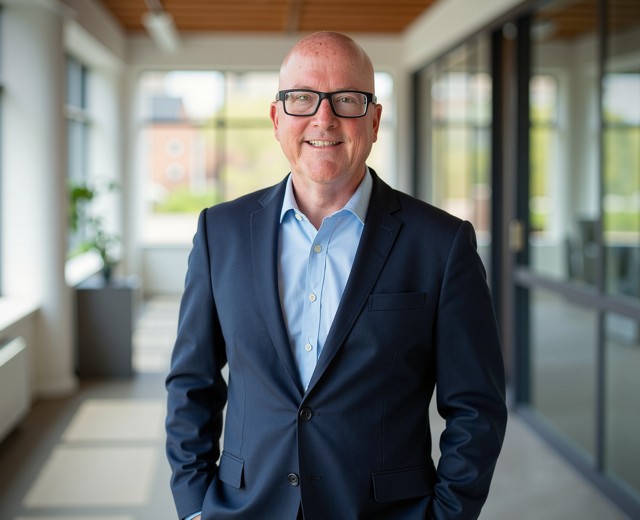
Presented by:
Thomas N. Ackerson, PE, MBA, FASM
Blue Origin Technical Fellow
ACE - EE - Engineering Center of Excellence
The Apollo and Space Shuttle programs are two examples where technical barriers were broken and significant materials and processing advances were made in a relatively short period of time. Today we undergo another boost in materials science and manufacturing technologies with the private sector becoming a key player in launch vehicles, space transport, space stations, and lunar landers. In order to drive the cost of space travel down significantly, the launch systems must be both reusable and efficient. They must also be as lightweight as practical, and withstand the mechanical rigors of multiple launches, the thermal stresses of re-entry, and corrosion issues related to oceanic recovery. This talk will focus on these challenges, and some of the steps being taken to overcome them.
Thomas Bio:
Thomas Ackerson is a materials testing executive with over 37 years of experience in metallurgical and non-metallic testing and characterization, failure analysis, forensic investigation, litigation support/expert witness, optical and electron microscopy, and corrosion testing/prevention. His education includes a B.S. in Materials Science and Engineering from North Carolina State University, an MBA from Averett University, and various continuing education short courses. Tom is a licensed professional engineer with registration in AL, GA, NC and SC. He was also recently named a 2026 Fellow of ASM International (FASM).
Currently employed as a Technical Fellow with Blue Origin (Merritt Island Rocket Park), Tom’s duties include failure analysis, material characterization, and materials/coatings characterization primarily for the New Glenn rocket, Blue Origin’s heavy-lift orbital launch vehicle that stands nearly 98 meters tall.
Tom recently completed a 3-year term as a board member of the Failure Analysis Society (FAS) within ASM International, and each year he plans/chairs sessions for the Failure Analysis symposium at IMAT. He is a member of ASM International’s IDEA Committee (Inclusion, Diversity, Equality, and Awareness). He enjoys giving public lectures regarding the space industry as well as meeting with university students for career planning.

